See the Key Difference
Understand why organoclay is used in oil-based fluids and regular bentonite is used in water-based fluids.
Comparison Page
Organoclay is bentonite that has been organically modified so it disperses and builds structure in oil-based and synthetic-based drilling fluids. Regular, untreated bentonite is a hydrophilic clay used in water-based mud and is not effective in oil-continuous systems. Use this comparison to confirm the right material and organoclay grade for your fluid system.

Quick Comparison Summary
This page helps buyers quickly:
Understand why organoclay is used in oil-based fluids and regular bentonite is used in water-based fluids.
Review a key-differences table covering base fluid, activation, and typical use case.
Confirm which material fits an oil-based, synthetic-based, or water-based drilling program.
Review the practical factors before moving from a water-based to an oil-based system.
Which Option Should You Choose?
The choice mostly comes down to the continuous phase of the drilling fluid. Oil-based and synthetic-based mud need an organically modified clay to build viscosity, gel strength, and suspension, because untreated bentonite does not disperse in oil. Water-based mud uses regular bentonite, which hydrates and builds structure directly in water.
If your program is switching from a water-based to an oil-based or synthetic-based fluid, plan for an organoclay-based additive rather than reusing bentonite loading rates or products.
Key Differences
Use this table to see how organoclay and untreated bentonite differ in composition, compatible phase, and typical use.
| Factor | Organoclay | Regular Bentonite |
|---|---|---|
| Base material | Bentonite treated with an organic modifier | Untreated, naturally hydrophilic bentonite |
| Compatible phase | Oil-continuous / synthetic-continuous phase | Water-continuous phase |
| Typical system | Oil-based mud, synthetic-based mud, invert emulsion | Water-based mud |
| Activation | Polar activator (methanol/water) for most grades | Hydration in water |
| Structure built | Viscosity, yield point, gel strength in oil phase | Viscosity and gel strength in water phase |
| Use in OBM/SBM | Effective, purpose-built | Not effective without organic modification |
Application and System Fit
Match your fluid system to the correct material before selecting a specific grade or product.
| Fluid system | Recommended material | Why |
|---|---|---|
| Oil-based mud (OBM) | Organoclay | Organoclay disperses and builds structure in the oil-continuous phase. |
| Synthetic-based mud (SBM) | Organoclay | Organically modified clay is required for synthetic-continuous systems. |
| Invert emulsion mud | Organoclay | Supports emulsion stability and rheology in the oil-external phase. |
| Water-based mud (WBM) | Regular bentonite | Untreated bentonite hydrates and builds structure in water-based systems. |
Selection Factors
Review these factors before selecting a specific organoclay grade for an oil-based or synthetic-based system.
Confirm the continuous phase before choosing between organoclay and bentonite.
Higher mud weights can affect grade and loading regardless of material.
Confirm the operating temperature window before selecting a standard or HPHT organoclay grade.
Confirm activator availability and mixing energy for organoclay grades.
Define the target rheology profile for the job design.
Request current documents for the organoclay grade under consideration.
Limitations and Cautions
This comparison is a general material guide, not a substitute for TDS review or formulation testing. Organoclay grade performance depends on base oil, temperature, mud weight, mixing energy, and activation route. Regular bentonite performance in water-based mud depends on water chemistry, salinity, and contamination, which are outside the scope of this organoclay-focused page. Buyers switching fluid systems should confirm material selection through the current TDS and a sample test in their own formulation before scaling to a bulk order.
Recommended Path
If your system is oil-based or synthetic-based, continue to the organoclay product family below.
Compare the full OD-series organoclay product family.
View Products General organophilic clay drilling-grade category for OBM and SBM.
View Product Primary oil-based mud viscosifier path for OBM buyers.
View Product Compare approved OD-series grade paths before testing a formulation.
Compare Grades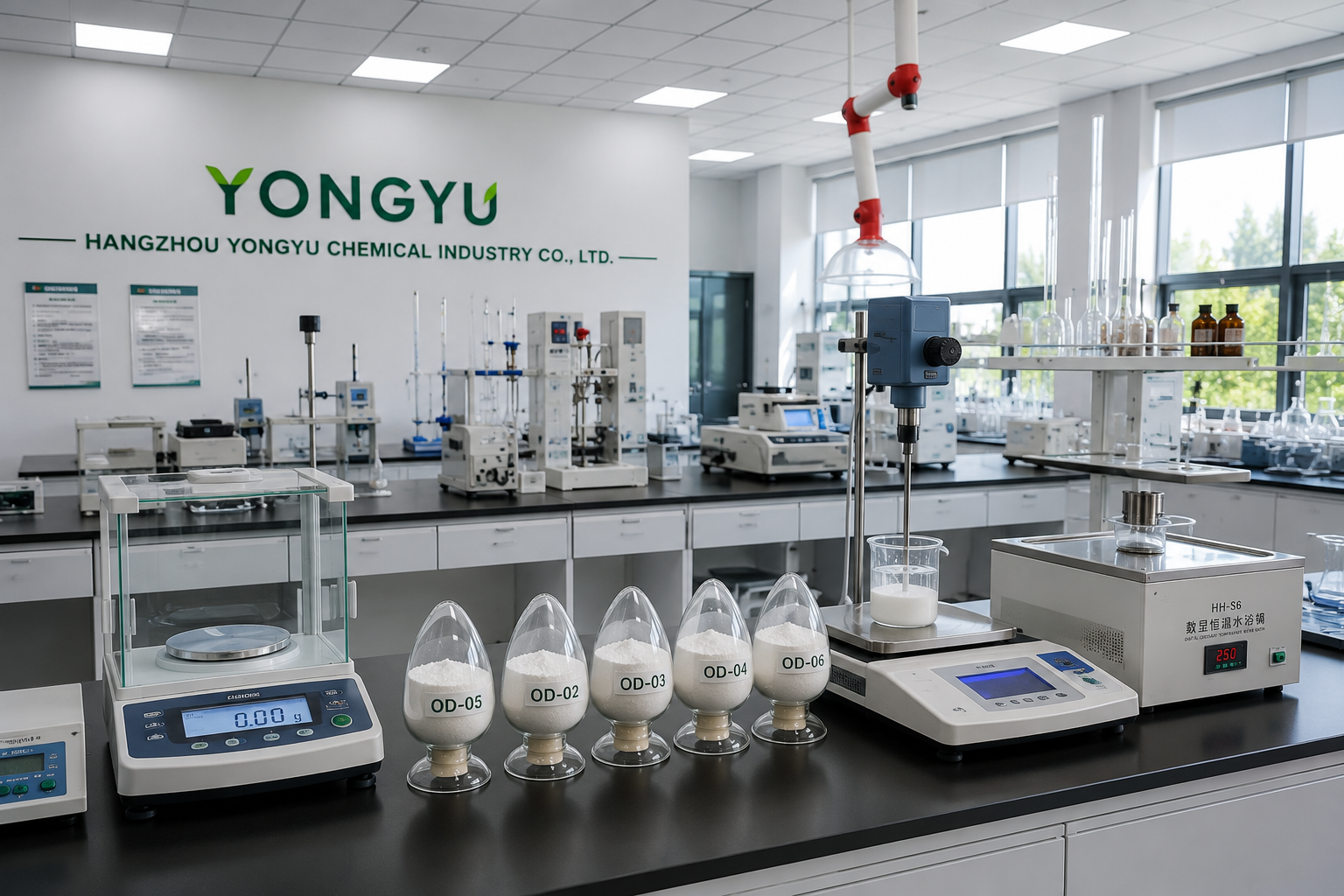
Manufacturer Direct Supply
HANGZHOU YONGYU CHEMICAL INDUSTRY CO., LTD. is presented in the approved project brief as a manufacturer established in 2005, with annual capacity of 25,000 tons per year. The team supports grade selection, export communication, document requests, sample evaluation, and quotation discussion for international oilfield chemical buyers.
Approved procurement facts include 25 kgs/bag packaging, MOQ of 1,000 kgs, and lead time of 7-10 working days after receiving deposit.
Technical Documents
Use these document paths to support material comparison, safety review, procurement approval, and sample testing.
Review current technical information before comparing materials or making a supplier decision.
Download / Request SDS / MSDSSupport safety, handling, compliance, and procurement document review before ordering.
Download / Request COAAsk for COA support where available when sample or batch-level quality review is required.
Download / Request Sample RequestShare your fluid system and target performance for evaluation guidance.
Request SampleBuyer Questions
No, not exactly. Organoclay (organophilic clay) is bentonite that has been chemically treated with a quaternary amine or similar organic modifier so it disperses in oil rather than water. Regular, untreated bentonite is a naturally hydrophilic clay that swells and builds viscosity in water-based systems but does not disperse effectively in oil-based fluids. Organoclay starts from a bentonite base but is a distinct, organically modified material built for the oil-continuous phase.
Regular, untreated bentonite is not effective in oil-based mud because it is hydrophilic and does not disperse or build structure in an oil-continuous phase. Oil-based and synthetic-based drilling fluids require an organically modified clay, such as organoclay, to build viscosity, gel strength, and suspension. Buyers evaluating a switch from water-based to oil-based systems should plan for an organoclay-based additive rather than reusing bentonite loading rates or products.
For oil-based and synthetic-based drilling fluids, organoclay is the functional choice because it is designed to disperse and build structure in the continuous oil phase, while regular bentonite is designed for water-based systems. The right organoclay grade still depends on base oil, temperature, mud weight, and rheology target, so buyers should confirm selection with the current TDS and sample testing.
Most organoclay grades need a polar activator, such as methanol or water in a controlled amount, to fully develop structure in the oil phase, similar in concept to how bentonite needs water to hydrate in water-based systems. Some easy-dispersing or self-activating grades reduce or simplify this step. Confirm the activation route and mixing sequence for your selected grade against the current TDS before mixing.
Confirm the base oil or synthetic fluid type, mud weight, temperature window, target viscosity and gel strength, mixing energy available, and activation route. Review the current TDS for the organoclay grade under consideration and request a sample to test in your own formulation before committing to a full switch or bulk order.
Bottom CTA
Send your fluid system, base oil or water phase, mud weight, temperature condition, quantity, and document requirements. The technical team can route you to the right material, OD-series grade path, TDS, sample, or quotation.